Why Scientists Ask Simple Questions
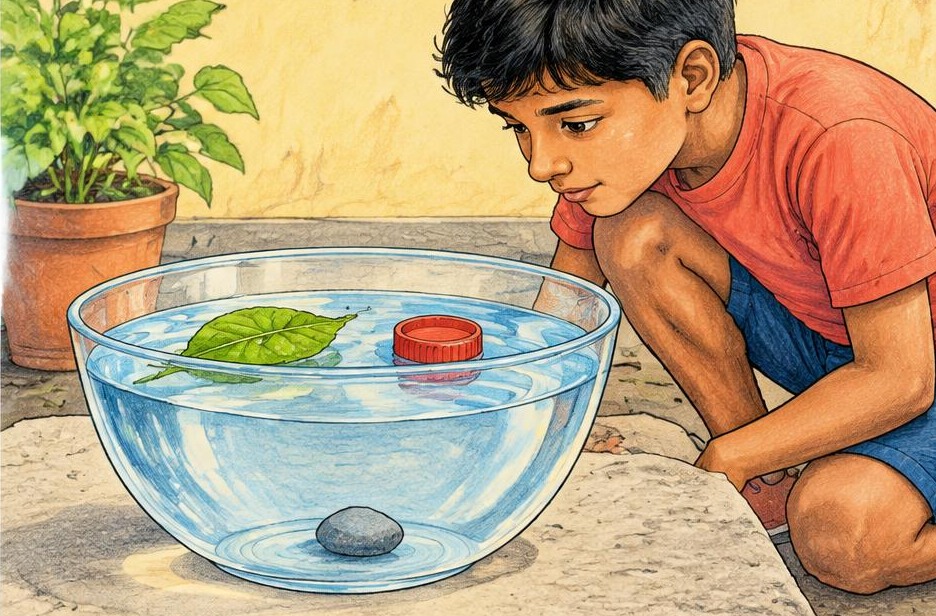
Why does ice float? Why do shadows change length? Why do some objects sink while others float? These questions sound simple.
Why does ice float?
Why do shadows change length?
Why do some objects sink while others float?
These questions sound simple.
But exploring them can lead to important scientific discoveries.
Science often begins with curiosity about ordinary things.
A scientist observes something interesting and asks why or how it happens.
Then they develop a possible explanation, make predictions, and test their ideas using evidence.
For example, imagine noticing that some objects float in water while others sink.
You might first guess that heavy objects always sink.
But what happens when you compare a large wooden block with a small metal coin?
Your first explanation may need to change.
That's an important part of science.
Scientific thinking isn't about always being correct.
It's about being willing to investigate and improve our understanding.
Children can practise this approach using everyday materials and simple experiments.
At MforMastery, we encourage children to ask questions, test ideas, and learn from unexpected results.
Because a small question can open the door to a much bigger discovery.