How to Become a Backyard Scientist
Do you need a laboratory to become a scientist? Not always. A balcony, garden, playground, or even a sunny window can become a place for scientific investigation.
Do you need a laboratory to become a scientist?
Not always.
A balcony, garden, playground, or even a sunny window can become a place for scientific investigation.
The secret is learning how to observe carefully.
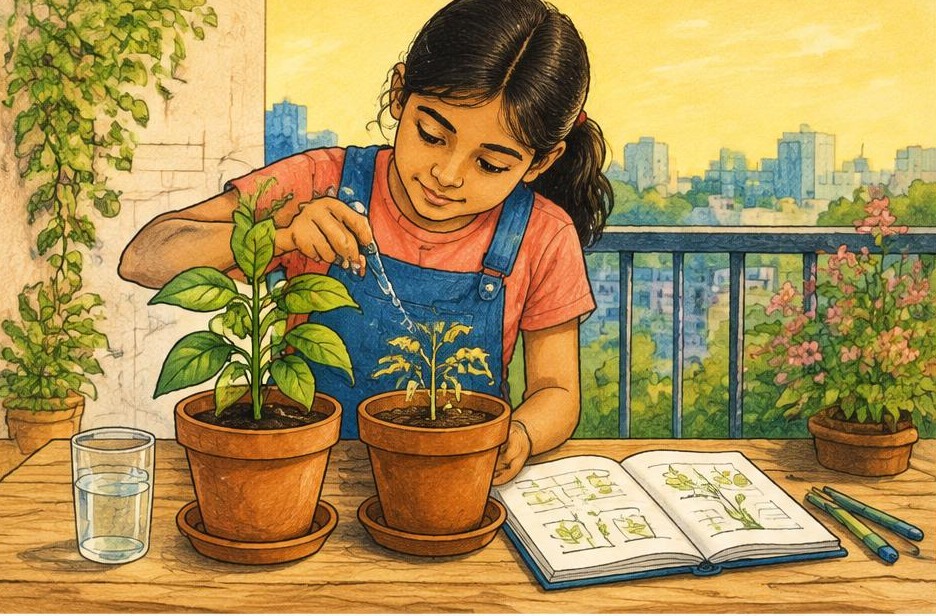
Imagine placing two similar plants in different locations.
One receives more sunlight than the other.
What changes might you notice over several days?
You could measure their growth, observe the colour of their leaves, and record your findings.
But to make the investigation meaningful, you should try to keep other conditions similar.
For example, both plants should receive comparable amounts of water and have similar soil.
This helps you understand whether sunlight might be influencing the results.
Scientists call this a fair test.
Children can explore many questions using this approach.
How quickly does a wet cloth dry in sunlight compared with shade?
Which paper airplane design travels farther?
How does the length of a shadow change during the day?
Every investigation begins with a question.
A scientist isn't simply someone who knows facts. A scientist is someone who investigates the world using evidence.