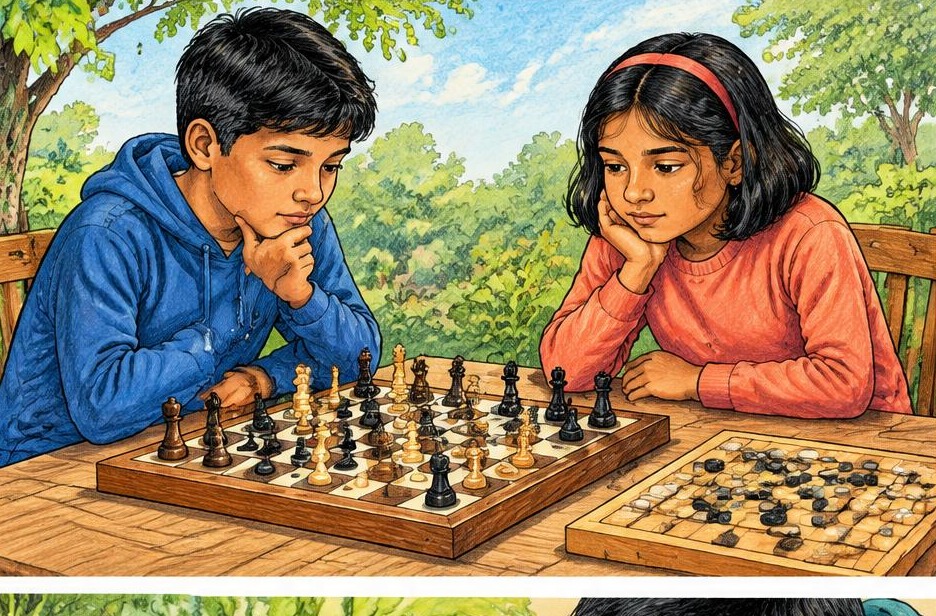
Can You Think Like a Detective?
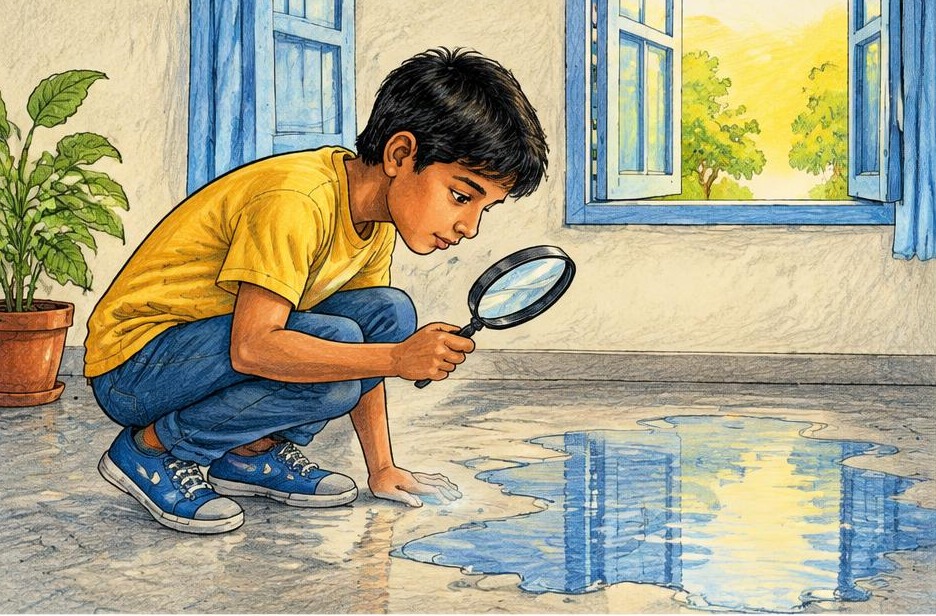
Imagine entering your classroom and noticing a wet floor near the window. What happened? Did someone spill water?
Imagine entering your classroom and noticing a wet floor near the window.
What happened?
Did someone spill water?
Did rain enter through the window?
Or was the floor recently cleaned?
A detective doesn't immediately choose the first explanation.
Instead, they collect clues, consider possibilities, and look for evidence.
This is called reasoning.
Good reasoning helps us distinguish what we know from what we assume.
For example:
Observation: The floor is wet.
Possible explanation: Rain entered through the window.
Evidence to check: Is the window open? Has it been raining?
This approach is useful far beyond detective stories.
Scientists use evidence to investigate questions. Doctors examine symptoms. Engineers investigate why machines fail.
And children can use the same thinking when solving everyday problems.
A curious thinker doesn't just ask, "What happened?" They also ask, "How do I know?"