Why Empathy Makes Us Better Problem Solvers
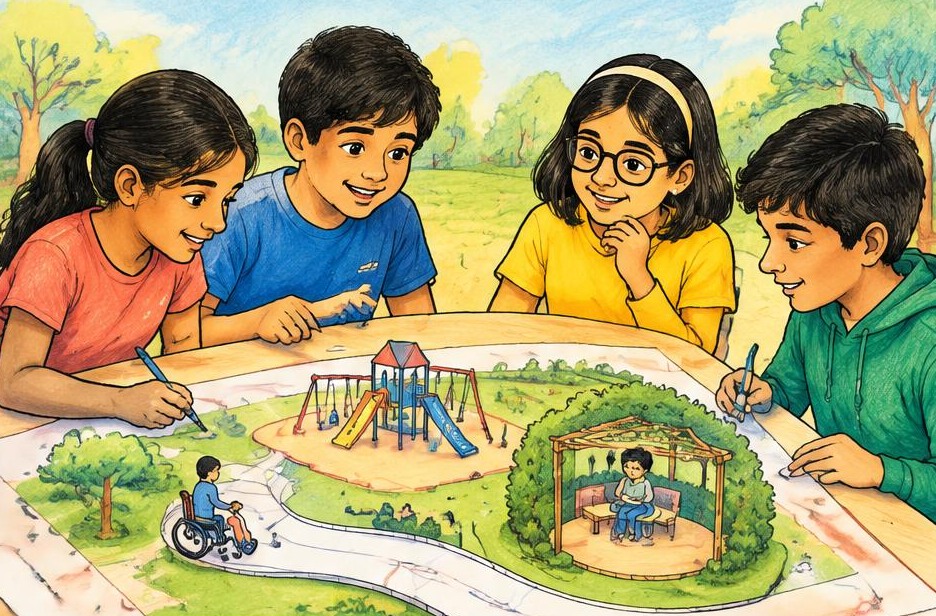
Imagine designing a playground. You might think about swings, slides, climbing walls, and colourful equipment. But what if one child uses a wheelchair?
Imagine designing a playground.
You might think about swings, slides, climbing walls, and colourful equipment.
But what if one child uses a wheelchair?
What if another child feels uncomfortable in noisy spaces?
Suddenly, designing a playground becomes more than choosing fun activities.
It becomes a question of understanding different people's needs.
This is where empathy becomes important.
Empathy means trying to understand how another person feels or experiences a situation.
It helps us look beyond our own preferences and consider different perspectives.
Designers use empathy to create products that are easier for people to use.
Doctors use it to understand patients' experiences.
Friends use it to support one another during difficult moments.
But empathy isn't about assuming we know exactly how someone feels.
It also involves asking questions, listening carefully, and respecting their answers.
When children practise empathy, they begin to recognise that one problem can affect people in different ways.
At MforMastery, we encourage children to understand people before designing solutions.
Because the best solutions begin with understanding who we're helping.