The Art of Noticing Small Things
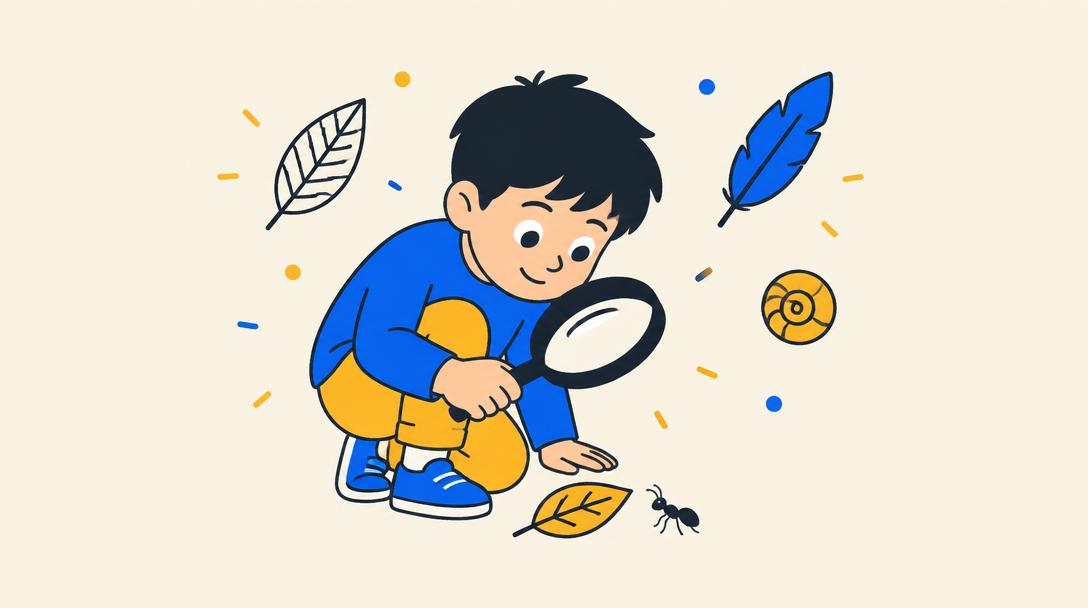
Ants, leaf veins, a changed pavement crack: observation is the root of curiosity and scientific thinking. A five-minute way to practise it.
Worksheet
Have you ever watched an ant carrying food? Or noticed how leaves have different patterns?
The world is filled with fascinating details, but we often move too quickly to notice them.
Observation is one of the foundations of curiosity, creativity, and scientific thinking.
Artists observe shapes and colours. Scientists notice patterns. Inventors identify problems that others overlook.
Children can develop this skill through simple everyday experiences.
The next time you go for a walk, encourage your child to slow down and observe.
What sounds can they hear? What shapes can they find? What has changed since yesterday?
Sometimes, the biggest discoveries begin with noticing something small.