How to Give and Receive Helpful Feedback
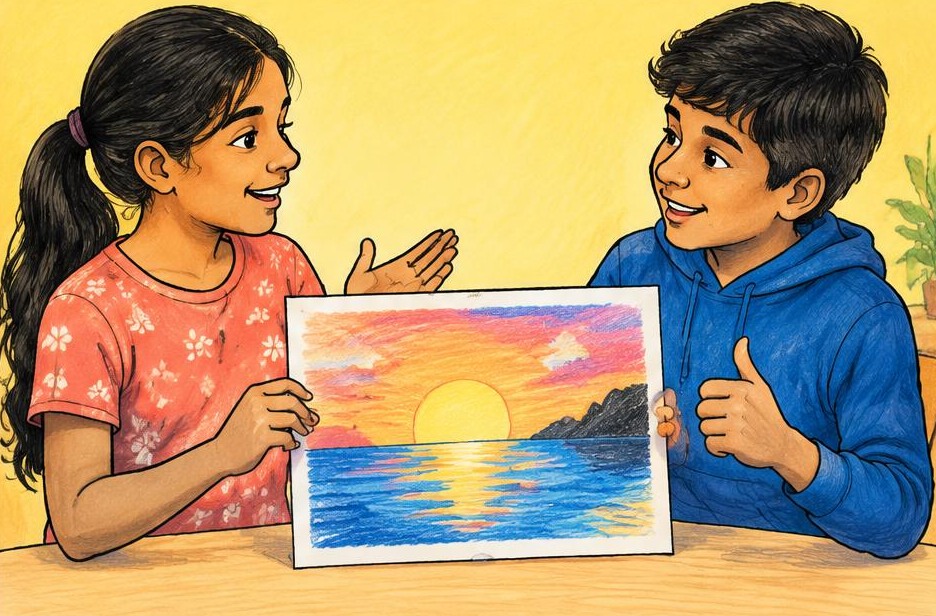
Imagine showing your drawing to a friend. They say, "It's nice." You smile, but you don't learn much. Now imagine they say: "I like how you've used different colours to show the sunset.
Imagine showing your drawing to a friend.
They say, "It's nice."
You smile, but you don't learn much.
Now imagine they say:
"I like how you've used different colours to show the sunset. Maybe adding a few details in the foreground could make the scene clearer."
That feedback gives you something to think about.
Helpful feedback is specific, respectful, and focused on the work rather than the person.
It explains what is working and suggests what could improve.
Receiving feedback is another important skill.
Sometimes suggestions may feel uncomfortable, especially when we've worked hard on something.
But feedback doesn't automatically mean our work is bad.
It offers another perspective.
We can ask questions, consider suggestions, and decide which changes will improve our creation.
Not every suggestion needs to be accepted.
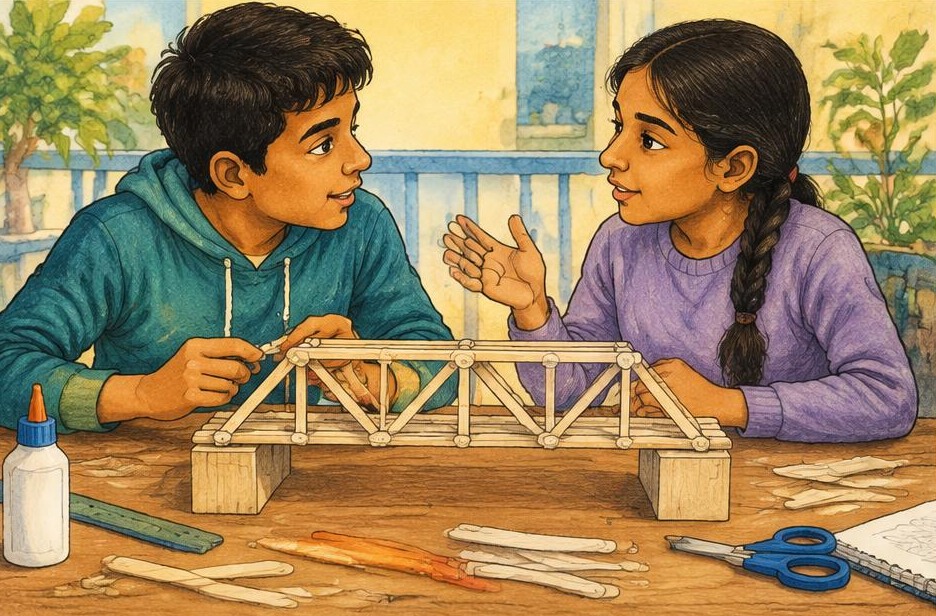
Children can practise giving and receiving feedback during art projects, experiments, presentations, and group challenges.
At MforMastery, we encourage children to see feedback as part of the creative process.
Because sharing an idea is not always the end of creating. Sometimes, it's the beginning of making it better.