How to Disagree Without Being Disrespectful
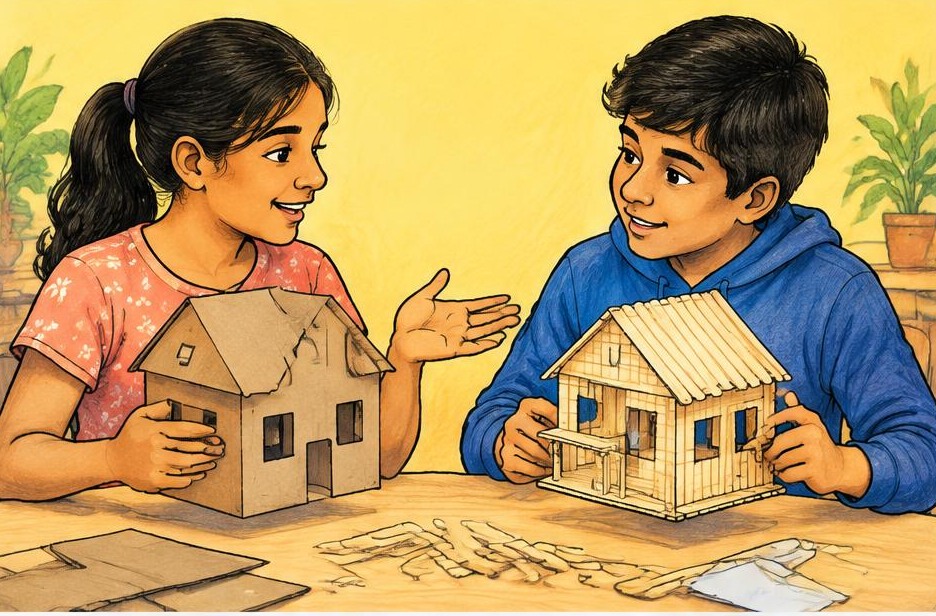
Imagine two children designing a model house. One wants to build it using cardboard. The other prefers wooden sticks.
Imagine two children designing a model house.
One wants to build it using cardboard.
The other prefers wooden sticks.
"I think cardboard is better!"
"No, wooden sticks are stronger!"
Soon, their discussion becomes an argument.
But what if they approached the disagreement differently?
One child could say, "I prefer cardboard because it's easier to cut and shape."
The other might respond, "I understand. I think wooden sticks could make the structure stronger."
Now they have something useful to discuss.
They can compare materials, test their ideas, and make a decision together.
Disagreement isn't necessarily a problem.
Different opinions can help us discover possibilities we hadn't considered.
The important skill is learning to challenge an idea without attacking the person sharing it.
Children can practise this by listening, explaining their reasoning, and asking questions.
Sometimes, they may even change their minds after hearing new evidence.
At MforMastery, we believe respectful disagreement is an important part of creative collaboration.
Because we can think differently and still work together.